Quick Answer
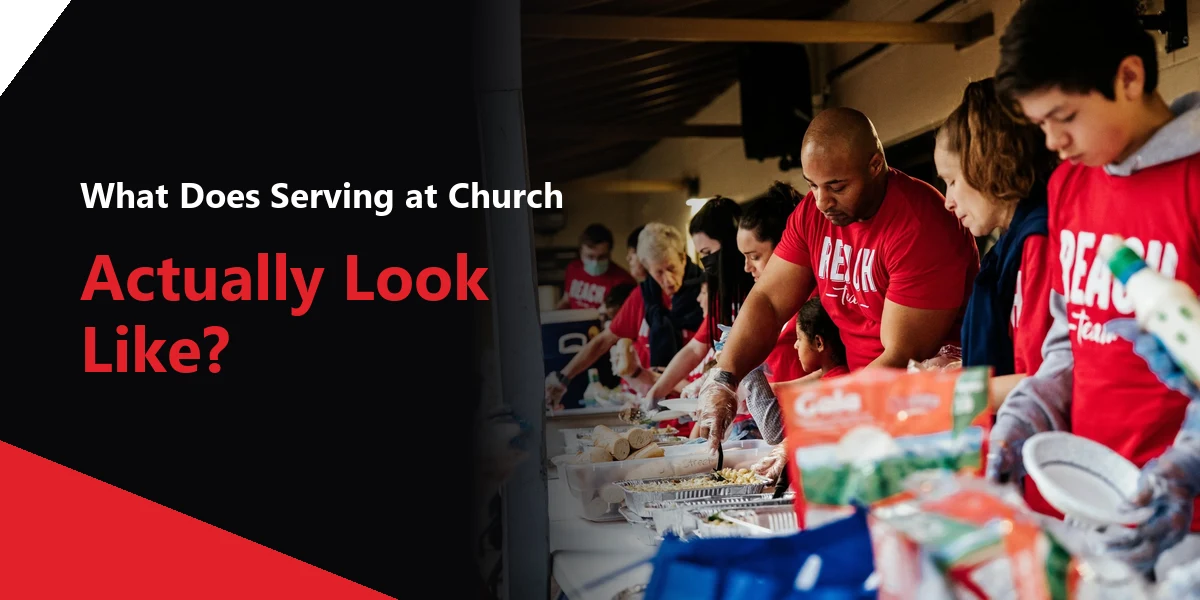
Serving at church means using your gifts, time, abilities, and willingness to help create an environment where other people can encounter God and find community. It can look like welcoming guests, helping kids, supporting worship, serving behind the scenes, or simply making someone feel seen. You do not need to be a pastor or stand on a stage to make a difference.
Key Takeaways
- Serving at church can look different for different people.
- You do not need special experience or a public role to make a difference.
- Many important serving roles happen behind the scenes.
- Serving can help you build relationships while contributing to something meaningful.
- Your abilities, personality, experiences, and availability can all shape where you serve.
- The goal is not simply to fill a position. It is to use what God has given you to help people.
In This Article
- What Does Serving at Church Mean?
- Do I Need Special Skills to Serve?
- What Are Some Ways People Serve at Church?
- Does Serving Behind the Scenes Really Matter?
- Can Serving Help Me Find Community?
- How Can Serving Help Me Discover My Purpose?
- What If I Do Not Know Where I Fit?
- How Much Time Does Serving Require?
- How Do I Know If I Am Ready to Serve?
- Frequently Asked Questions
- Take Your Next Step
What Does Serving at Church Mean?
Maybe you have been attending church for a while and keep hearing people talk about serving.
You see volunteers welcoming people at the door. You notice people helping families, working with kids, supporting worship, preparing spaces, or making things happen behind the scenes.
And you start wondering:
Could I do that?
Maybe the idea sounds exciting.
Maybe it sounds intimidating.
Maybe you are not sure you have anything useful to offer.
Serving at church is simpler than many people imagine. At its heart, serving means using what you have to help someone else.
Sometimes that contribution is visible.
Often, it is not.
A person may be the first friendly face someone sees when they walk into church. Someone else may prepare a room before anyone arrives. Another person may help a child feel safe and welcomed. Someone may help with technology so hundreds of people can participate in worship without ever knowing that person’s name.
Different roles. Same purpose.
Serving helps create opportunities for people to encounter God, experience community, and take meaningful steps forward.
That is why every hand matters.
Do I Need Special Skills to Serve?
One of the biggest misconceptions about serving at church is that you need to be especially talented, outgoing, spiritual, or experienced.
You do not have to be a singer.
You do not have to preach.
You do not have to know the entire Bible.
You do not have to be the person who naturally walks into a room and starts conversations with everyone.
Different people bring different strengths.
Some people love being around crowds.
Others prefer working quietly behind the scenes.
Some are naturally organized.
Some are creative.
Some enjoy working with children.
Some notice details everyone else misses.
Some simply have a gift for making people feel comfortable.
All of those qualities can matter.
The Bible describes the church as a body made up of many parts. The idea is simple: we are not all supposed to contribute in exactly the same way.
If everyone tried to do the same job, many important things would never get done.
Serving at church is not about becoming someone else.
It is about discovering how the person God created you to be can contribute to the lives of others.
What Are Some Ways People Serve at Church?
When people hear “serving at church,” they often picture someone standing on a stage.
That is only one small part of what makes a church community work.
Serving can include welcoming guests, helping families navigate their first visit, supporting children’s environments, assisting students, helping prepare spaces, supporting worship experiences, praying with people, or working behind the scenes.
Some roles involve conversations.
Others involve logistics.
Some happen during a weekend service.
Others may happen before people arrive or after everyone has gone home.
Think about what happens when a family visits a church for the first time.
Someone may help them know where to park.
Another person welcomes them.
Someone helps their children get where they need to go.
Other people have already prepared the spaces they will use.
During the service, additional team members help create an environment where that family can focus on worship and the message.
The family may never meet everyone who contributed to their experience.
But every contribution mattered.
That is what serving at church often looks like.
Many people doing their part so someone else can feel welcomed, supported, and cared for.
Does Serving Behind the Scenes Really Matter?
Absolutely.
Some of the most important contributions in a church are the ones most people never notice.
A healthy serving culture is not built around recognition.
It is built around impact.
Imagine walking into a church where no one prepared the building, helped families, supported the service, organized spaces, or welcomed guests.
You would notice quickly.
When people serve well, however, many of those details become almost invisible.
That is part of what makes them powerful.
Serving behind the scenes means caring enough about someone else’s experience to contribute even when you may never receive credit for it.
It could be preparing something before a service.
It could be helping solve a problem quietly.
It could be making sure another person has what they need.
It could be staying a few minutes longer because something needs to be finished.
The role may seem small from the outside.
The impact may not be.
You never know what someone is carrying when they walk through the doors of a church.
A simple act of service can help remove one more obstacle between that person and the encouragement they came hoping to find.
Can Serving Help Me Find Community?
Yes. Serving at church can be one of the ways people move from attending church to becoming part of a community.
It is possible to sit near the same people every weekend without ever really knowing them.
Serving changes the dynamic.
Instead of simply being in the same room, you begin working toward something together.
You learn names.
You have conversations.
You solve problems.
You celebrate wins.
You begin seeing familiar faces.
Relationships often develop naturally because you are spending time with people around a shared purpose.
For someone who has been attending church but still feels like an outsider, contributing can create a meaningful shift.
Church begins to feel less like a place you visit and more like a community where you participate.
You are no longer only asking, “What can I receive here?”
You begin asking, “How can I help?”
That change can be significant.
How Can Serving Help Me Discover My Purpose?
Purpose can sound like an enormous concept.
People sometimes imagine they need one dramatic moment when God reveals exactly what they are supposed to do with the rest of their lives.
Often, purpose becomes clearer through action.
You try something.
You discover what gives you energy.
You notice what you care about.
Other people recognize strengths in you and encourage you to use your gifts.
You learn where your contribution seems to help.
Then you keep growing.
Serving can provide a practical environment for that discovery.
Maybe you begin helping because someone invited you.
Over time, you realize you love encouraging people.
Or teaching children.
Or creating environments.
Or solving problems.
Or helping people feel welcome.
Those discoveries can teach you something about how God has shaped you.
Purpose is not always found by waiting until you understand the entire plan.
Sometimes it becomes clearer while you are faithfully taking the next step in front of you.
What If I Do Not Know Where I Fit?
That is normal.
You do not have to know your ideal role before you begin exploring how to use your gifts.
In fact, you may discover that something you never considered becomes one of your favorite ways to contribute.
Start with a few simple questions:
What do I enjoy doing?
What am I naturally good at?
What kind of people do I enjoy helping?
Do I prefer being in front of people or behind the scenes?
What needs do I tend to notice?
How much time can I realistically give?
Your answers can provide clues.
You can also ask other people what strengths they see in you.
Sometimes the people around us recognize gifts that we overlook because they feel ordinary to us.
Action Steps provides a structured way to learn more about Action Church, explore how God has uniquely shaped you, and discover opportunities to get connected.
In fact, we walk you through personality and gifts tests to help you discover your God-given design and how you can use those gifts to serve the local church.
You do not need to arrive knowing exactly where you belong.
You can discover it one step at a time.
How Much Time Does Serving Require?
Your available time may look different depending on your season of life.
A parent with young children may have different capacity than a college student.
Someone caring for an aging parent may have different availability than someone with a flexible schedule.
That is okay.
Serving is not about comparing your contribution with someone else’s.
The important question is what you can faithfully and realistically give.
If you are exploring an opportunity to use your gifts, ask what the expectations are before committing.
Understanding the role, schedule, and responsibilities helps you make a thoughtful decision.
Consistency matters more than trying to do everything.
You do not need to serve everywhere.
You need to find a place where you can contribute well.
How Do I Know If I Am Ready to Serve?
You may be more ready than you think to serve at church.
You do not need to wait until you feel completely qualified.
You do not need to know everyone.
You do not need to have been attending for years.
And you do not need to have your entire spiritual journey figured out before you start exploring what your next step could be.
Readiness can begin with willingness.
Are you willing to help?
Are you willing to learn?
Are you willing to show up?
Are you willing to use what God has given you for someone else’s benefit?
If the answer is yes, it may be time to explore what serving could look like for you.
The first step does not have to be a permanent commitment.
It can simply be a conversation.
Learn what opportunities exist.
Ask questions.
Discover where your strengths might fit.
Then take the next step that makes sense.
Frequently Asked Questions
Do I have to be a member of Action Church to serve?
Requirements may vary depending on the serving opportunity. The best next step is to connect through Action Steps or speak with the Action Church team about the area you are interested in so you can understand any requirements before committing.
What if I am shy or introverted?
You can still serve. Not every role requires speaking with large numbers of people. Churches need people with many different personalities and strengths, including people who prefer supporting others behind the scenes.
What if I have never volunteered at a church before?
Previous church volunteering experience is not what determines whether you have something meaningful to contribute. Start by exploring available opportunities to serve at church, asking what the role involves, and identifying a place that fits your strengths and availability.
Can serving help me meet people?
Yes. Serving puts you alongside other people working toward a shared purpose, which can create natural opportunities for relationships to develop. Small Groups remain an important way to build deeper community as well.
What if I try a serving role and it is not a good fit?
Discovering what does not fit can be useful too. Talk with the appropriate team leader about your experience and explore whether another opportunity better matches your strengths, interests, or availability.
How do I decide where to serve?
Consider your strengths, interests, personality, experiences, and current capacity. Action Steps can also help you explore how you have been uniquely shaped and identify practical ways to get connected.
Is serving only about helping on Sundays?
Serving can take many forms. Specific opportunities and schedules depend on the ministries and teams currently available at Action Church. Ask the Action Church team about current opportunities rather than assuming every serving role happens during a weekend service.
What is the first step if I want to serve at Action Church?
Start with Action Steps. It is designed to help people learn more about Action Church, discover their strengths and gifts, and explore how they can get connected and make a difference.
Take Your Next Step
You do not need a microphone to make a difference.
You do not need a title.
You do not need to be the most outgoing person in the room.
You simply need to be willing to use the gifts that God has given you to help someone else.
Your contribution might help a first-time guest feel welcome.
It might help a child look forward to church.
It might support someone during a difficult season.
It might create an environment where another person can focus on worship.
And along the way, serving may help you discover something about yourself too.
Your gifts have a purpose.
Your contribution matters.
And there is a next step you can take.
Ready to discover where you can make a difference? Explore Action Steps and begin finding your place at Action Church.
About Action Church
Action Church exists to reach people where they are and connect them to everything God has for their lives. Through weekend services, Small Groups, Action Steps, and opportunities to serve at church, people can know God, find community, and make a difference.